Tin has been used by humans for thousands of years.
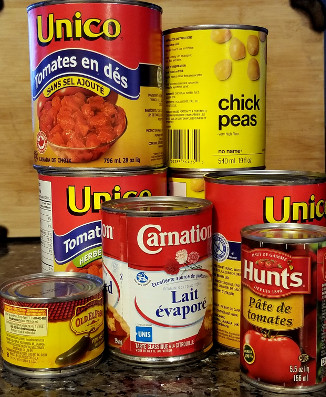
Its most famous use – in tin cans – started thanks to Napoleon Bonaparte in the 1800s. The fact that tin does not corrode in air or water makes it ideal for storing food. At one point, over forty million tin cans were produced every year, but use of aluminum and other types of containers have reduced this number.
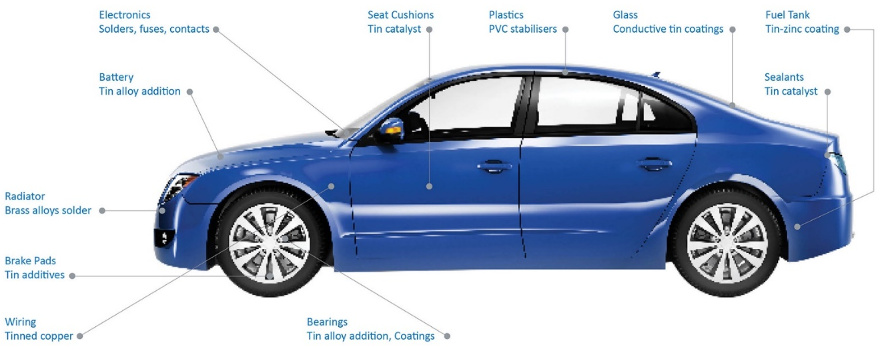
Today, there are many other uses of tin, including window glass, electronics and auto parts.
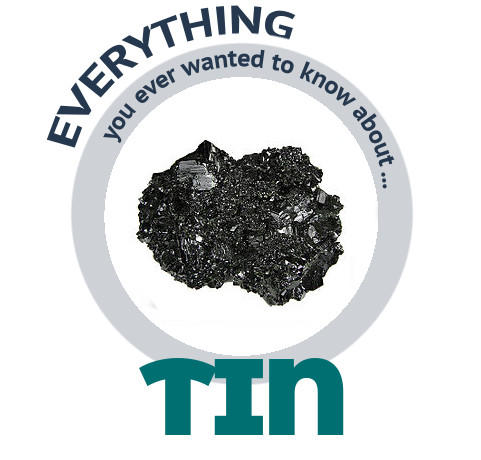
Here is everything you ever wanted to know about … TIN!
FAST FACTS!
Tin is a soft, pliable, silvery-white metal.
Tin is called the ‘spice element’ because a little of it is present everywhere in ways that are essential to our quality of life.
Tin has been used by humans for thousands of years. Tin has been found in implements from as early as 3500 B.C. and tin is even mentioned several times in the Old Testament in the Bible.
The tin can had its origins in the perennial problem of how to feed an on-the-move army. Napoleon Bonaparte offered a reward in 1795 to anyone who could come up with a way to preserve food for military use. In 1810, French chef Nicolas Appert won the 12,000-franc prize by inventing canning — the process of sealing food or drink in a jar or bottle with the use of boiling water. This discovery cleared the way for the invention of the tin can only a year later. In 1810, British merchant Peter Durand got a patent for using tinplated steel to can food. Tin resists corrosion, making it an ideal covering for relatively cheap steel.
The tin can’s heyday ended in the mid-20th century when Coors Brewery introduced the first aluminum can. Cheaper, lighter and recyclable, aluminum rapidly overtook tin and steel.
Early craftsmen found tin too soft to work with, but when it was alloyed with copper, bronze was formed.
The Oscars statues are mostly bronze (copper, tin and other metals) with just a thin layer of gold on them. The value of the gold is only about $57. If they were solid gold, the statues would be worth about $370,000 and weigh twice as much. During World War II the statues were made of plaster due to metal shortages.
Pewter, another alloy made of mostly tin with copper and lead, came into use shortly after the Bronze Age. Pewter is about 85% tin. Nova Scotia has several well-known pewter manufacturers and stores.
Foil made from a thin leaf of tin was commercially available before its aluminium counterpart. In the late 19th century and early 20th century, tin foil was in common use, and some people continue to refer to the new product by the name of the old one. Tin foil is stiffer than aluminium foil.
When tin is bent at room temperature, it makes a high-pitched creaking sound known as the "tin cry," caused by the deformation of tin crystals.
Oscar statues aren’t solid gold – they are actually mostly tin. (Photo credit: http://www.oscars.org/oscars/statuette)
USES OF TIN
Perhaps the most important use of tin, historically, has been to make bronze — an alloy of copper and tin or other metals — that changed civilization by ushering in the Bronze Age. People began making or trading for bronze tools and weapons at different times, depending on geography, but the Bronze Age is commonly accepted to have started around 3300 B.C. in the Near East.
Tin has many uses. It takes a high polish and is used to coat other metals to prevent corrosion, such as in tin cans, which are made of tin-coated steel.
Most window glass is made by floating molten glass on molten tin to produce a flat surface. Tin salts sprayed onto glass are used to produce electrically conductive coatings.
Copper alloys including bronze are still widely used in applications ranging from sculpture to electrical products. Tin and other alloys, including powders and coatings, are used in brake pads, roofing, engineering, bearings and numerous other ways.
Traditional pewter giftware is still highly valued and tin wine capsules are used in luxury wines and spirits.
Tin also is used in bell-making.
Tin is sometimes called the ‘spice element’ because a little of it is present everywhere in ways that are essential to our quality of life. Tin use in vehicles is a good example.
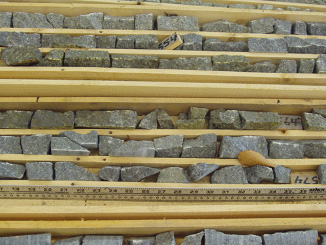
Ore from the East Kemptville tin-indium deposit. (Photo credit: http://avalonadvancedmaterials.com/projects/east_kemptville/)
The East Kemptville tin-indium deposit was an operating tin mine from 1985-1992 and was North America’s only large primary tin producer, before closing prematurely in 1992 due to a collapse in tin prices.
Increasing global demand for tin and tightening supplies have resulted in higher tin prices, creating an opportunity for the East Kemptville mine to return to production.
HOW WAS TIN FORMED?
Tin
Tin is around the 50th most abundant element in the Earth's crust, but is not generally found in its free form.
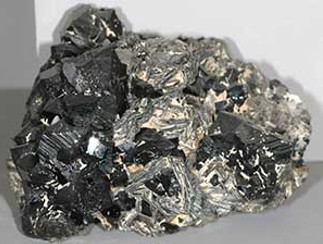
The most important ore mineral of tin, cassiterite (tin dioxide), is formed in high-temperature veins that are usually related to igneous rocks, such as granites and rhyolites; it is often found in association with tungsten minerals.
HOW IS TIN MINED?
Vein and disseminated tin deposits are mined by the same methods used in hard-rock mining of other non-ferrous ores such as zinc. The ore is broken by drilling and blasting, transported to a concentrator where it is crushed and ground and then concentrated by gravity methods.
Tin is extracted by roasting the mineral casseterite with carbon in a furnace to approximately 2500 degrees Fahrenheit. The next step involves leaching with acid or water solutions to remove impurities. Electrostatic or magnetic separation helps to remove any heavy metal impurities. Compared to the processes used in the past, today’s advanced technology allows the industry to produce 10 times more tin.


 Tin
Tin